News & Events
Powerful Supermarket Research Resources
January 2026
Protein, Produce and Processing Shape New Nutrition Guidance
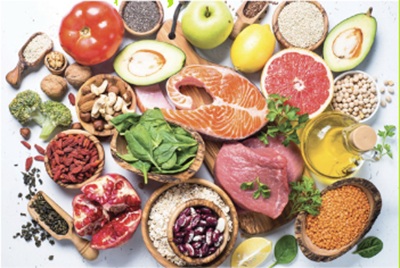
The release of the 2025–2030 Dietary Guidelines for Americans may not prompt immediate changes on grocery shelves, but it sends a clear signal about where shopper expectations, product development and merchandising strategies are heading next.
The updated food pyramid may be a necessary signal, but it is not a guarantee of immediate change. What matters more for grocery retailers is how evolving nutrition guidance intersects with real-world consumer behavior, supply constraints and price pressure.
Issued by the U.S. Department of Health and Human Services and the USDA, the updated guidelines reinforce several themes already reshaping the food retail landscape. At a high level, they emphasize higher protein intake, increased consumption of fruits and vegetables, and limits on highly processed foods high in added sugars and sodium.
To change their nutrition decisions requires consumers to “know, want and can”, describes Sebastián Garcia-Dastugue, associate professor of marketing and logistics at Florida International University’s College of Business.
“If consumers don’t know about the new nutritional guidelines, they won’t reevaluate what they eat. Change requires some effort, so consumers need to want to change. After they know what to change and they want to change, the can plays a role. Can they change? Is food available? Can they afford it?,” he said. “The pyramid is there, but shoppers have to actively seek it out.”
A nutrition mantra is ‘good nutrition starts grocery shopping adequately,’ Garcia-Dastugue pointed out.
“That requires unlearning habits, behaviors that we do with minimal cognitive effort, almost automatically. This unlearning isn’t easy,” he added. “Knowledge can drive motivation, but access and affordability are required for the consumer behaviors to change. For shoppers on the edge of food insecurity, the limiting factor may not only be awareness or intent but purchasing power or affordability.”
That direction mirrors broader shifts already underway across grocery aisles, as retailers lean into protein-forward meals and snacks, expand fresh offerings and prioritize products built around simpler ingredient statements.
One of the more notable changes involves dietary fat. While maintaining the long-standing recommendation that saturated fat account for no more than 10 percent of daily calories, the guidance encourages consumers to choose whole-food sources of fat, including meat, whole-fat dairy and avocados. Butter and beef tallow are also referenced as acceptable options within that framework, marking a departure from prior guidance that broadly discouraged those ingredients. A revised food pyramid graphic reinforces the shift, placing meat, dairy, fruits and vegetables prominently.
Industry groups representing core grocery categories largely welcomed the update. Produce organizations pointed to the continued emphasis on fruits and vegetables as a clear and consistent message for consumers. Protein-focused groups highlighted recognition of both animal- and plant-based proteins as central to balanced diets.
“The guidelines reinforce the importance of protein, and meat and poultry remain key sources of high-quality protein,” said Julie Anna Potts, president and CEO of the Meat Institute.
The timing of the update intersects with a prolonged period of elevated grocery prices, complicating how nutrition messaging translates at shelf. Food inflation remains uneven but persistent across core categories, particularly dairy and protein. Butter prices climbed 58 percent year over year, according to November Bureau of Labor Statistics data, while prices for meat, poultry, fish and eggs rose 5.2 percent between September 2024 and September 2025.
Beef costs continue to stand out. Ground beef prices rose 16 percent over the past year and now sit 27 percent above the most recent five-year average. Uncooked beef roasts posted a 21 percent annual inflation rate in November. With cattle supplies tight and consumer demand holding firm, retail beef prices are expected to remain under upward pressure into 2026.
Those dynamics continue to shape how shoppers balance health goals with affordability. Retailers are leaning on promotions, private label expansion, flexible pack sizes and value messaging to help consumers navigate higher prices while still aligning with evolving dietary guidance.
The recommendations also add momentum to ongoing scrutiny of highly processed foods and sweetened beverages, including soda, fruit drinks and energy drinks. While the guidance does not impose restrictions at retail, it signals continued pressure on center-store categories historically tied to volume and margin. As assortments evolve, execution will matter: managing shorter shelf lives, reducing waste and replacing inventory more precisely will be essential to keeping fresh and perimeter categories profitable.
Sustained changes in shopper behavior will be required as much as manufacturers, retailers and distributors make meaningful adjustments to support the newly promoted nutrition guidelines.
“Existing operating models across the supply chain are not designed to accelerate adoption of the pyramid and, in some cases, may slow broader uptake,” said García-Dastugue. “Any meaningful transition will depend on whether consumer demand materializes at scale.”
Although the dietary guidelines are advisory, food manufacturers closely track these signals as they plan innovation pipelines. Retailers often see the impact downstream through new product introductions, packaging claims and marketing strategies well before broader consumer behavior shifts become visible.
Taken together, the latest update reinforces an industry reality already playing out across grocery: assortments are increasingly shaped by the intersection of nutrition guidance, consumer demand and economic pressure, with protein, produce and value-driven innovation remaining central to retail strategy.
Ultimately, the guidelines reinforce that nutrition policy may set direction, but consumer behavior, pricing and execution will determine what actually moves at retail.
Late-Night TV Fixture Brings Fresh Salsa Concept to Refrigerated Case
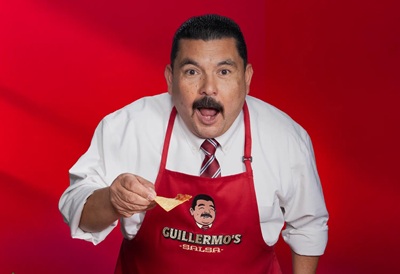
A familiar face from late-night television is making a move into grocery with the launch of Guillermo’s Salsa, a new refrigerated brand from Guillermo Rodriguez, best known for his long-running role on Jimmy Kimmel Live!.
Developed in partnership with Ithaca Hummus founder Chris Kirby, the salsa debuted Jan. 15 at Costco locations across the Northeast, marking the brand’s first major retail appearance. Additional distribution is planned for later this year as the line expands into more grocery stores’ refrigerated sets.
Positioned as a fresh, cold salsa alternative, Guillermo’s Salsa is made with chopped tomatoes, lime juice, onions, cilantro and peppers. The approach steers away from shelf-stable jars in favor of simpler ingredient lists and a made-fresh profile, a positioning that continues to resonate with shoppers seeking authenticity in the Hispanic foods category.
“Guillermo’s Salsa is built around the idea that simple is best: real ingredients, zero nonsense, and flavor that delivers,” the launch announcement stated. “It’s fresh, cold salsa made with chopped tomatoes, lime juice, onions, cilantro, and peppers — the way Guillermo’s abuela used to make it. Not like the suspicious stuff in a jar that lasts for two years.”
The initial lineup includes three heat levels. Mild emphasizes bright tomato flavor with minimal spice, medium delivers a balanced kick and hot turns up the heat with habañero. Each variety is designed for everyday use across chips, tacos and prepared meals.
Rodriguez joined Jimmy Kimmel Live! more than two decades ago after being discovered while working as a security guard, later becoming a staple of the show. Kirby brings experience in refrigerated dips following Ithaca Hummus’ growth in clean-label, cold-case offerings.
The Costco rollout provides early scale and visibility, while the broader grocery expansion places Guillermo’s Salsa into an increasingly competitive refrigerated salsa segment driven by demand for fresh, authentic Hispanic flavors.
Del Monte Brands Head to New Owners Following Bankruptcy Auction

Six months after seeking Chapter 11 protection, Del Monte Foods Corp. has reached agreements to sell nearly all of its assets, breaking up one of the most recognizable center-store portfolios across three buyers with distinct category strengths.
Under a court-supervised auction announced Jan. 15, Fresh Del Monte Produce Inc., B&G Foods Inc. and Pacific Coast Producers emerged as winning bidders for different parts of the Walnut Creek, Calif.-based company. The transactions remain subject to approval by the U.S. Bankruptcy Court for the District of New Jersey, with a hearing set for Jan. 28. Ownership transitions are expected to be completed by the end of the first quarter of 2026.
Fresh Del Monte Produce agreed to acquire Del Monte’s vegetable, tomato and refrigerated fruit businesses for $285 million, assuming certain liabilities. The deal includes the Del Monte and S&W packaged vegetable brands; Del Monte, Contadina and Take Root Organics tomato brands; the Del Monte refrigerated fruit brand; and the Joyba beverage line. Fresh Del Monte will also gain global ownership of the Del Monte trademark and related intellectual property, subject to existing licensing arrangements. The Coral Gables, Fla.-based company said the brands will operate within a dedicated business unit, with no immediate changes planned for products currently on shelves.
“By uniting fresh and shelf-stable food under one strategy, we are honoring the brand’s legacy while supporting it for continued relevance and growth,” Mohammad Abu-Ghazaleh, chairman and CEO of Fresh Del Monte Produce, said in a statement. He noted opportunities for consistency, efficiency and long-term value creation.
B&G Foods, based in Parsippany, N.J., agreed to purchase Del Monte’s broth and stock businesses, including the College Inn and Kitchen Basics brands, for $110 million in cash. The company expects the acquisition to add approximately $110 million to $120 million in annual net sales, strengthening its position in cooking staples and meal-prep categories.
Pacific Coast Producers, a Lodi, Calif.-based agricultural cooperative specializing in private-label canning, is acquiring Del Monte’s shelf-stable fruit businesses, excluding production assets. The transaction includes rights and licenses to use the Del Monte and S&W brands for ambient fruit and fruit sauces in the U.S., including Puerto Rico, and Mexico. Financial terms were not disclosed.
Del Monte executives said in a statement the combined transactions substantially cover all its assets as going concerns, offering continuity for brands long embedded in grocery assortments.
“This outcome demonstrates the enduring value of Del Monte Foods’ brands and operations,” said Greg Longstreet, CEO of Del Monte Foods, adding that the company is focused on supporting a smooth transition for customers, vendors and employees.
Founded in 1886, Del Monte built its reputation on canned fruits and vegetables before filing for bankruptcy in New Jersey last summer, citing roughly $1.245 billion in secured debt. For retailers, the breakup underscores both the staying power of legacy brands and the continued reshaping of center-store ownership as category-focused operators step in to drive the next phase of growth.
Dutch Bros Pushes Beyond the Drive-Thru With Launch for Retail Offerings

Dutch Bros is extending its reach beyond the drive-thru as the fast-growing coffee chain makes its first meaningful move into the grocery aisle with a new line of branded coffee creamers.
The products have begun appearing in select supermarkets, including Albertsons, Safeway and Vons, giving shoppers a way to enjoy Dutch Bros drinks at home. A broader national rollout is planned, with Walmart expected to begin carrying the creamers in 2026.
“For us, this is about meeting customers where they already are,” said Amie Wentz, Dutch Bros business unit director at Trilliant Food & Nutrition. “The early response at Albertsons has been encouraging. It reinforces the strength of the brand and the demand for Dutch Bros at-home products.”
The expansion marks an important step for the Oregon-based brand, which has built a loyal following around customization, speed and beverage creativity. Moving into retail creates a new consumer touchpoint and allows the brand to stay connected with fans between shop visits, while also reaching households outside its current shop footprint.
Alongside the creamer launch, Dutch Bros is widening its packaged beverage strategy with larger-format cold brew offerings, including 48-ounce formats aimed at at-home consumption. Grocers continue to see steady demand for flavored creamers and cold brew concentrates as shoppers replicate coffee shop routines in their kitchens.
This marks the company’s first entry into full CPG retail, supported by a partnership with Trilliant Food & Nutrition, which holds the license for Dutch Bros grocery products. The initial portfolio spans more than 35 SKUs across categories including refrigerated creamers, bagged and single-serve coffee, and ready-to-drink beverages.
“CPG is a natural next step for Dutch Bros as we expand our reach and meet customers wherever, whenever and however they choose to enjoy their coffee,” said Debbie Beisswanger, senior vice president of brand marketing at Dutch Bros. “With our signature roasts and fan-favorite flavors becoming available in retail and online, we’re making it easier for existing and new customers to enjoy Dutch Bros, while continuing to build for long-term, sustainable growth.”
The creamers are crafted with real milk and cream and draw directly from Dutch Bros’ menu. The initial lineup includes Vanilla Caramel inspired by the Golden Eagle, Caramel Mocha based on the Caramelizer and Chocolate Macadamia Nut reflecting the Annihilator, with more flavors expected.
Founded in 1992 as a single pushcart in Grants Pass, Oregon, Dutch Bros has grown into a publicly traded company with more than 1,100 locations nationwide and plans to surpass 2,000 shops by 2029. The move into grocery mirrors a broader push by restaurant and beverage brands to capture at-home occasions.
Entering the refrigerated creamer set places Dutch Bros alongside established national brands, but its beverage-first identity, regional loyalty and youth appeal may help it stand out as consumers trade up for coffee shop products at home.
Availability, pack sizes and distribution will vary by retailer as the rollout expands ahead of the planned Walmart launch.
Heinz Tests New Fry Box Designed for On-the-Go Dipping
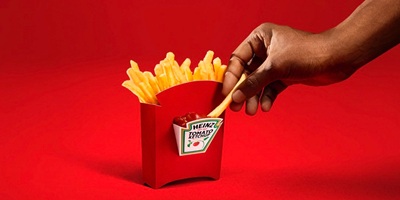
Heinz is rolling out a new piece of packaging engineering aimed at solving one of fast food’s oldest complaints: trying to dip fries while on the move. The new Heinz Dipper features a built-in ketchup compartment molded into the fry box and is debuting at select restaurants and sports venues across the U.S. and abroad.
In a press release, the company indicated the design trial reflects how often fries are now eaten in cars, stadium seats and other away-from-table settings. Industry research shows a growing share of QSR traffic tied to drive-thru and take-out, yet packaging has largely stayed the same. Heinz also noted that many consumers report skipping condiments altogether because the format simply isn’t practical on the go.
The Dipper is intended to streamline that experience — no balancing packets on dashboards, no drizzling ketchup directly onto fries. Instead, the sauce sits inside the box in a dedicated pocket.
Initial U.S. test locations include Fat Sal’s in Los Angeles, Devil Dawgs in Chicago, Lucky’s Hot Chicken in Dallas, and Scotiabank Arena in Toronto, with additional pilots across Canada, Mexico, Europe, Asia and the Middle East.
For Heinz, the trial serves two purposes: solving a real-world usage issue and strengthening its footprint in foodservice packaging innovation. Company leaders described the rollout as part of its broader “Away From Home” strategy, as more meal occasions continue shifting beyond the dining room.
If the Dipper performs well in early testing, the format could expand into wider distribution. Fries and ketchup are staying together.
Albertsons Rolls Out Incrementality Model for In-Store Retail Media
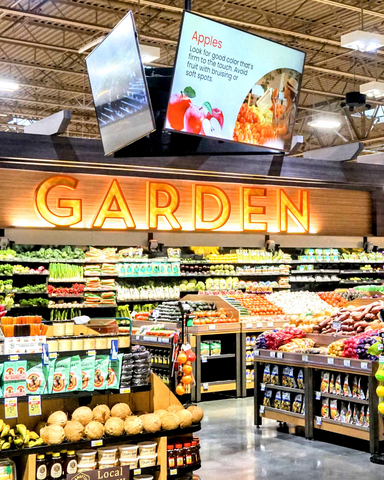
Albertsons Media Collective is introducing a new in-store measurement framework designed to quantify the true sales impact of retail media inside supermarkets. The model aims to distinguish incremental lift from purchases that would have occurred regardless of advertising exposure — a longstanding challenge for in-store media, where traditional digital tracking tools don’t apply.
The methodology uses a matched-market design at the store level. Test locations running in-store ad campaigns are compared against closely matched control stores with no screen exposure. Nearly 60 variables are incorporated to reduce bias and isolate causal lift, rather than relying on attribution signals that can over-credit advertising.
“In-store media has often been measured with tools that confuse correlation for impact,” said Liz Roche, vice president of media and measurement at Albertsons Media Collective. “By isolating causal lift at the store level, we’re showing brands the actual impact of in-store media activation — and giving them confidence that their investment is driving net-new sales.”
More than 50 advertisers are currently active on the retailer’s digital display network, which launched in 2025 across departments including deli, pharmacy and front-of-store locations. Mondelēz International was one of the early users of the new framework for a campaign supporting Sargento Cheese Bakes snack crackers. The effort layered in-store screens with on-site and off-site retail media placements and demonstrated incremental sales lift tied to physical-store exposure.
Marking a key advancement, the initiative comes as in-store retail media continues to build momentum industry-wide. Ad spending in the channel is expected to surpass $1 billion by 2029, according to data from eMarketer, reflecting growing interest in reaching shoppers as close as possible to the point of purchase.
The measurement framework is being positioned as a foundation for future omnichannel capabilities as retailers and CPGs look to link digital engagement, media investment and store-level outcomes inside a unified ecosystem.
December 2025
Mangusa: From Modest Toko to Curaçao’s Leading Supermarket Chain
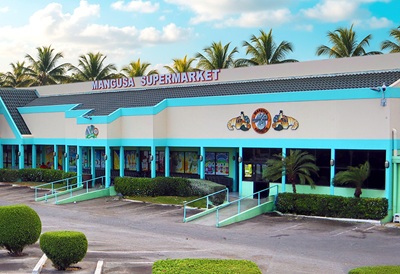
Mangusa stands today as the largest, best-known supermarket brand in Curaçao — a family-owned business that began as a single “toko” and grew, expansion by expansion, into a destination hypermarket that draws locals, tourists, and even weekend crowds who treat the store as a community hub.
The chain’s flagship Mangusa Hypermarket is now considered one of the island’s premier retail anchors, a place where customers shop, eat, linger in the food court, and enjoy a wide assortment of products that has far outgrown its beginnings.
“People love it, they find everything here,” said Anna Maria Sillé Goncalves Do Estreito, one of five siblings who runs the business. “It has become a destination… on Saturdays and Sundays it’s a party, people stay and chat, there’s music.”
That momentum is fueling the next chapter of growth. The family is now planning a full redevelopment of the Rio Canario supermarket — originally built to replace an older, much smaller store — because customers say they want a larger space that mirrors the hypermarket experience.
A Family Legacy Rooted in Hard Work
The story of Mangusa begins with two migrants from Madeira, Portugal: Belmira Sousa de Lira and her husband, Francisco Gonçalves do Estreito, Sr. The couple opened their first small shop near the Janwe church in 1973, supplying it with produce from their land and supplementing the rest with goods from the floating market.
As the community grew, so did their business. They opened a second toko in 1977. By 1984, the family expanded it into Toko Mangusa, which soon became the Mangusa Minimarket — and, five years later, the Mangusa Supermarket.
In 1996, their eldest son, Francisco Jr., purchased land that paved the way for Mangusa Rio Canario. The chain’s boldest milestone arrived in 2011 with the opening of the Mangusa Hypermarket on Cascoraweg.
Belmira and Francisco Sr.’s five children — Francisco Jr., Jose, Paulo, Anna Maria, and Gilberto — all grew up working in the stores. Today, each one oversees a key operational area, essential roles that keep the operation running smoothly.
“Each of us has a job to do… so that someone is responsible for every part,” the family said, describing the shared commitment that keeps the company grounded despite its size.
Growing With the Community
As Mangusa expanded, so did its customer base. Once primarily serving local neighborhoods, the stores now draw customers “from other kinds of backgrounds and financials,” including Dutch residents and international visitors who see the hypermarket as a must-visit stop.
Many families on the island “have grown alongside us,” the family said, forming a multigenerational relationship with the brand.
The stores have evolved alongside that growth. Today, Mangusa Hypermarket carries a wide range of supermarket essentials, along with household goods, electronics, and extensive fresh offerings across meat, produce, bakery, dairy, frozen foods, beverages, and more.
“The food court has become a popular gathering spot where customers can purchase meals, sit, relax, and spend time together,” the family said. “Since it’s bigger there’s more variety.”
One thing customers won’t find is clothing — a deliberate choice that keeps the focus on food and household needs.
A Future Built on Familiar Strengths
As Mangusa looks toward expanding and modernizing the Rio Canario location, the family remains committed to the formula that has guided them from their first toko to Curaçao’s leading supermarket brand: quality, variety, community, and a relentless commitment to serving customers well.
The company’s slogan reflects that philosophy: “E miho kalidat na e miho preis!” meaning “ The best quality at the best price!”
And in many ways, the community’s enthusiasm continues to shape the company’s direction. “What people like is that we have grown, from what it was before,” said the family.
Key Food Opens New Store in Tampa Bay, Serving a Diverse Community
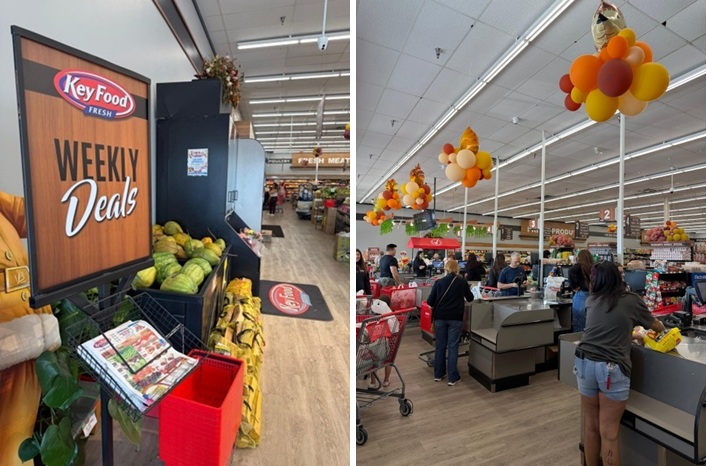
A new Key Food Supermarket celebrated its grand opening in Tampa Bay on Nov. 15, offering a wide range of staples that reflect the everyday cooking traditions of the community.
Shoppers navigate a produce section featuring a diverse selection of fruits and vegetables, sourced from local farms as well as regional suppliers to ensure consistent availability and quality. The meat and seafood departments prioritize sustainably sourced options.
The store caters to a diverse customer base, blending familiar local favorites with international ingredients.
“We feature a lot of international items as we have a huge Latin community as well as from the West Indies and Jamaica,” said Harry Diaz, vice president of Key Food Tampa Bay. “We’re catering to the whole community, not just a portion of it.”
Key Food Tampa Bay occupies the former Save a Lot space, adapting it with a typical supermarket layout using regular gondolas. While the store does not include a bakery or hot food service, it offers online shopping through Instacart, making it convenient for customers to shop from home.
The store focuses on practicality, stocking items people rely on to prepare the foods they grew up with, while responding to emerging requests for products from other international cuisines.
The Diaz family — two generations working together — operates five Florida stores, including three Bravo Supermarkets and two Key Food locations, including the new Tampa Bay store. Since 2019, they have averaged about one new store per year, carefully evaluating locations that meet the needs of the communities they serve.
“There’s always an opportunity out there,” said Diaz. “We try to see if it fits us and serves the community as they need and move from there.”
Key Food Stores is a chain of 445 independently owned and operated supermarkets across eight states.
Deep Indian Kitchen Takes Momo Dumplings National
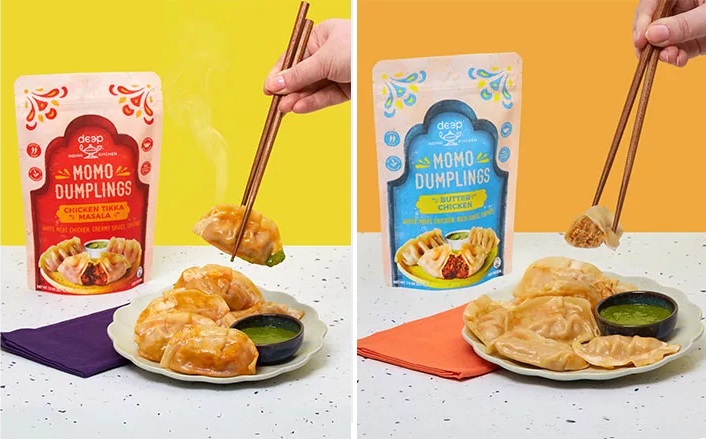
Deep Indian Kitchen is widening its frozen presence with the national rollout of its Momo Dumplings at Whole Foods Market, giving shoppers broader access to a product the brand says has quickly become one of its strongest performers.
Three varieties — Butter Chicken, Chicken Tikka Masala and Veggie Masala — are now available in the retailer’s freezer sets.
Momos, long popular across the Himalayas and throughout India, have gained steady traction in the U.S. thanks to their familiar dumpling format paired with bold, regional flavors. Deep Indian Kitchen builds on that appeal by filling each dumpling with one of its signature sauces, offering consumers a heat-and-eat option that brings a taste of India to the table in minutes.
Each steamable bag warms directly in the microwave and includes a packet of coriander chutney to deliver a balanced, traditional dipping experience — a touch the brand says has resonated with shoppers looking for convenient global meals.
“When we first introduced Momo Dumplings earlier this year, we were thrilled by how quickly people embraced them,” said Kiernan Laughlin, general manager at Deep Indian Kitchen. “Since then, we’ve grown to represent nearly 50 percent of all frozen Indian food sales in the U.S. Launching nationwide at Whole Foods Market continues our mission of making authentic Indian cuisine accessible to consumers nationwide.”
Deep Indian Kitchen, now available in more than 25,000 stores across the country, notes that interest in Indian flavors continues to grow within frozen entrees, driven by consumers seeking both convenience and culinary exploration.
The brand expects the added distribution at Whole Foods to introduce the product to new households while supporting continued demand for globally inspired frozen meals.
Functional Foods Gain Momentum as Health-Focused Shoppers Reshape the Market
Retailers across grocery and mass channels are seeing a clear shift: shoppers are looking for more from the foods and beverages they buy, and health-forward products are increasingly influencing category resets, innovation strategies and shelf allocation decisions. What began with probiotics and fortified cereals has broadened into a sweeping movement toward foods that promise digestive support, immune benefits, cardiovascular wellness and performance nutrition.
New findings from DataM Intelligence underscore the scale of that momentum. The global functional food and beverage market reached USD 364.98 billion in 2024 and is expected to climb to USD 846.58 billion by 2032, growing at just over 11 percent annually. The expansion reflects rising demand for fortified and enriched foods — probiotics, proteins, vitamins and minerals, fibers and omega-3s — across both retail and digital channels.
Consumer behavior points to the same shift. Nearly two-thirds of global shoppers now purchase functional foods at least weekly. Probiotic beverages, plant-protein drinks and fortified cereals posted double-digit growth, while online sales jumped 28 percent over the past year, helped by personalized nutrition programs and subscription-based platforms. More than 40 percent of new food and beverage launches in 2023–2024 included functional health claims.
The category mix is evolving as well. Probiotics, proteins, vitamins/minerals, fibers and omega-3s make up the core functional segments, each tapping different consumer needs ranging from digestive support to heart health and energy metabolism.
Behind the growth are several converging forces, including higher health awareness, rising lifestyle-related diseases and new clean-label formulations. Advances in food processing and fortification are also enabling more bioavailable ingredients and targeted products for aging consumers, metabolic health and preventive wellness.
For grocery retailers and category managers, the message is clear: functional foods are moving firmly into the mainstream — and driving some of the strongest growth across center store, dairy, beverages and online shopping.
Melting Pot Brings Fondue to Grocery Shelves
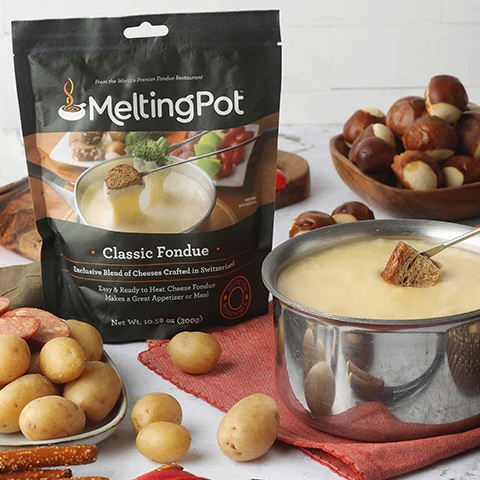
Melting Pot is taking its signature fondue experience from the restaurant table to kitchens nationwide. Just in time for the holidays, Melting Pot at Home has expanded into more than 2,500 grocery stores, including Publix, Harris Teeter, Amazon Fresh, Safeway Southwest, and Safeway Mountain West.
Shoppers can now find classic cheese fondues like Classic Alpine and Aged Cheddar & Gouda, along with select chocolate fondues, in specialty cheese or prepared foods sections.
“Melting Pot at Home brings our signature fondue to your table when you can’t make it to the restaurant,” said Jennifer Lukas-Bourgeois, director of retail. “It’s ideal for family-style, interactive dinners that are easy for younger kids to enjoy, and you can have a brand you love ready in your fridge.”
The ready-to-heat fondues—microwave or stovetop, no fondue pot required—deliver a restaurant-quality experience at home. Crafted in Switzerland with simple, high-quality ingredients, the products are flash-frozen and shipped to stores or directly to consumers. Retailers can pair them with charcuterie, fresh produce, artisan breads, or wine and beer for complete holiday spreads.
This expansion taps into the growing specialty cheese category, offering families a convenient way to share flavorful, interactive meals from cozy winter nights to game-day gatherings.
“Our founder, Bob Johnston, always envisioned a retail line, and the pandemic made exploring it even more urgent,” Lukas-Bourgeois said. “Melting Pot at Home is essentially a start-up within a very established company. It’s been in business for two years, and we’re already talking to another 3,000 grocery retailers for 2026.”
New grocery products include six cheese spreads for snacking, three signature sauces and dressings—ginger plum, house, and teriyaki-curry blend dubbed “curry-yaki”—plus limited-time fondues like s’mores for next summer. The company, which opened its first restaurant in 1975 in Maitland, Florida, now operates more than 90 locations across 31 states and Canada, with new restaurants planned, including Dubai in the first quarter.
November 2025
Bluebox Expands Ice-as-a-Service Model to Grocery and Convenience Sectors
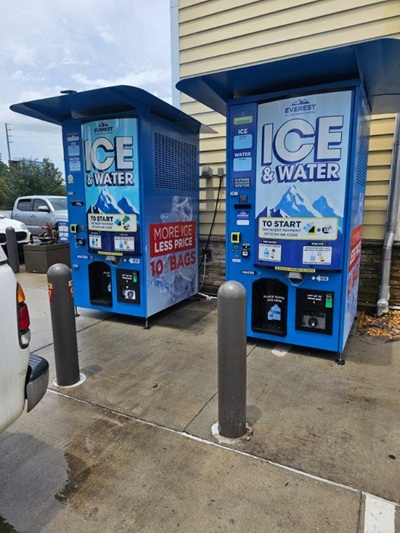
Bluebox Smart Ice and Water has expanded its Ice-as-a-Service (IaaS) program to franchisees in the grocery and convenience sectors, introducing a modern solution to one of retail’s most overlooked operational challenges: ice and water fulfillment.
The company supplies self-serve ice and water vending machines equipped with advanced filtration, cashless payment, and remote monitoring. As the industry’s first on-premise ice and water vending solution, Bluebox enables retailers to provide ice and water on demand, disrupting traditional delivery methods that have remained largely unchanged for decades.
“We’re a disruptor in the marketplace,” said Ben Gaskill, CEO of Bluebox Smart Ice and Water. “By providing zero capital expenditure, no maintenance costs, and guaranteed uptime, we empower multi-unit franchisees to increase ice and water sales without the risks, inefficiencies, or waste that have troubled this industry for decades.”
By keeping machines running around the clock, Bluebox eliminates inventory shortages, labor waste, customer complaints, vendor and customer theft, after-hours sales restrictions and environmental impact—turning what was once a costly problem into a profitable business solution. Gaskill noted that the company’s mission is to transform a historically flawed supply chain into a profitable asset for qualified operators.
“The way ice gets into the cooler hasn’t changed,” he said. “Just because it’s been done the same way for a very long time doesn’t mean it’s the right way. Today, the ice sold at stores is made 50–100 miles away and trucked in. That makes it expensive — retailers must pay for diesel, and you can’t call someone if you get bad service.”
Traditional ice programs often result in late or missed deliveries, damaged product, theft and bulky freezers that take up valuable selling space. Bluebox’s automated system eliminates those pain points by handling all delivery, installation and servicing. Its patented VersaVend™ technology operates with a single moving part, contributing to a 99 percent uptime rate and minimal maintenance. Customers can pay inside the retailer or directly at the machine, which produces a bag of ice in just six seconds.
“If a convenience store or grocery store ends up out of stock—because it wasn’t delivered or not enough—that represents a 10 to 20 percent loss,” Gaskill added. “Bluebox Smart Ice and Water offers a solution that checks all the boxes.”
Retailers earn revenue each time a customer buys ice or water, without ever managing inventory—maximizing profits and optimizing their retail footprint.
“This is the future of the way ice will be delivered,” he said. “The product can be made easily and it will grow quickly, creating a win-win with retailers.”
Most recently, Bluebox joined Core-Mark’s Core Partners program, a move that will integrate its self-service ice machines into one of the largest distribution and retail networks in North America. The partnership, which takes effect in January 2026, gives Bluebox access to Core-Mark’s extensive base of convenience and grocery customers as well as its field sales and marketing infrastructure.
The collaboration marks a major step in Bluebox’s plan to scale its automated ice technology across North America, positioning the system as a more efficient, low-maintenance alternative to traditional ice delivery. Through the partnership, retailers gain a streamlined way to incorporate ice vending into their store operations without upfront investment or added maintenance demands.
Raybern’s Expands Frozen Sandwich Line with New Italian Beef
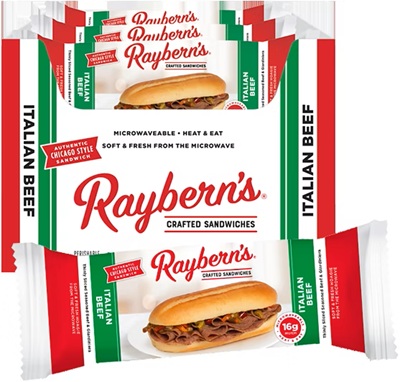
Raybern’s, a leading name in frozen deli-style sandwiches, is bringing a Chicago favorite to freezers nationwide with the debut of its Italian Beef sandwich — a bold, savory take on the classic, now available in a convenient heat-and-eat format.
Crafted with thinly sliced seasoned beef, savory spices and a hint of tangy giardiniera, the sandwich is served on Raybern’s signature “bakery-soft” bread. Each serving packs 16 grams of protein and warms in minutes, maintaining its soft texture straight from the microwave to deliver authentic Chicago-style flavor at home.
“The Italian Beef is all about authentic flavor and comfort,” said Lexi Levang, Senior Marketing Manager at Raybern’s. “We wanted to capture the taste Chicago is known for and make it easy for anyone to enjoy at home.”
Known for its top-selling Philly Cheesesteak and globally inspired creations, Raybern’s continues to grow its frozen sandwich portfolio with innovative, craveable offerings. Earlier this year, the brand introduced the Pork Bánh Mì, underscoring consumer demand for globally inspired, ready-to-eat formats.
The new Raybern’s Italian Beef sandwich is available now at Walmart and will roll out to Dollar General in early 2026.
The Fresh Market Redefines Its Brand with Curated Design and Culinary Experience
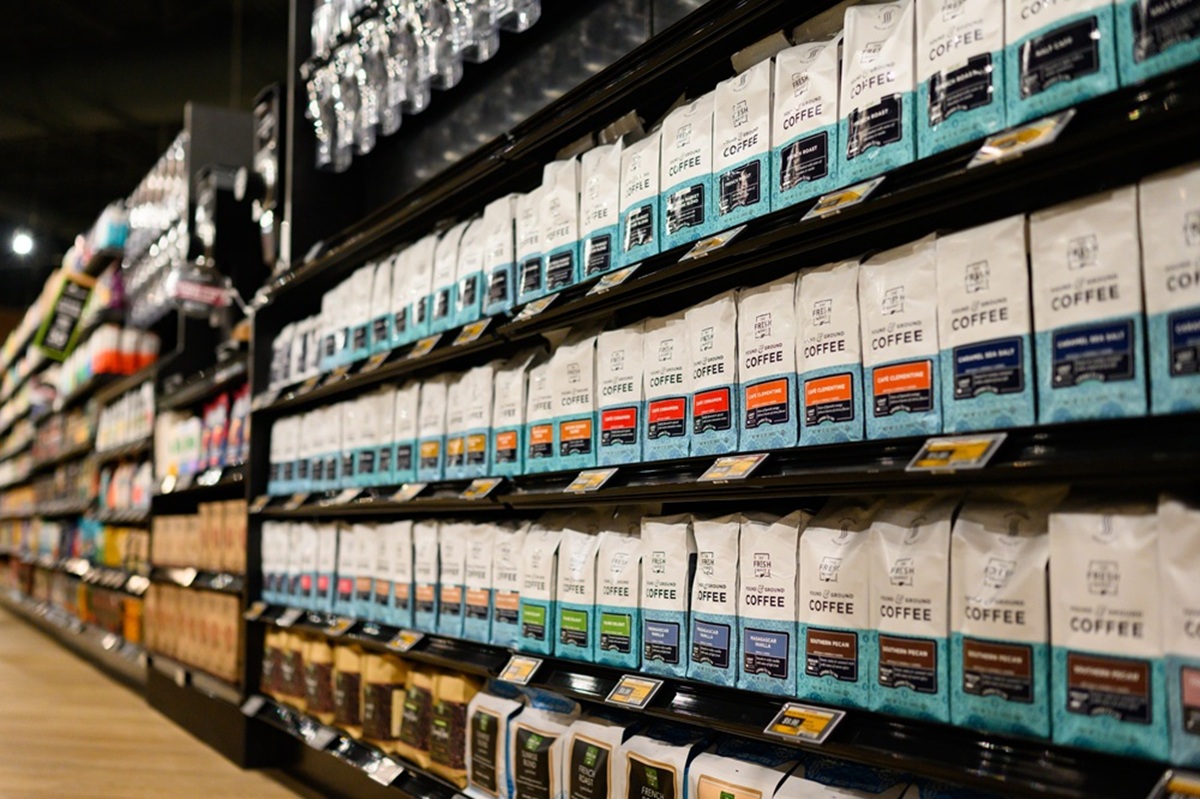
The Fresh Market is leaning into its identity as a specialty grocer built around quality, hospitality, and discovery — a strategy that’s guiding everything from private label design to in-store experiences.
“After COVID, we came out with all guns firing,” said Michelle Beck, director of own brands at The Fresh Market. “With new leadership and a clear vision, we decided to return to who we’ve always been — a place for curated finds, exceptional quality and a sense of trust in our private labels.”
The Greensboro, N.C.-based grocer has focused on reclaiming its point of difference — offering what executives call a “treasure chest” of specialty products rather than competing on mass assortment. That means leaning into fresh departments such as floral, produce, full-service bakery and the signature butcher counter, while reimagining the center store through its own-brand offerings and ready-made meal solutions.
“The design leans into the attributes that speak to our guests,” Beck said. “Equator helped us create a better version of who we are — a best-in-class brand. Now we’re a pioneer.”
Glyn Robinson, senior creative director at U.K.-based Equator Design, noted the agency’s team drew inspiration from European food markets and the sensory experience of The Fresh Market itself.
“When we visited the stores, it felt like walking through one of Europe’s great food halls — the coffee aroma, the copper pizza oven, the visual energy,” he said. “We wanted to keep that buzz and translate it into packaging that feels both premium and personal.”
Robinson described the result as “approachable elegance” — design that’s refined yet familiar, speaking to guests in a conversational tone that highlights flavor and authenticity. “It’s elegant, friendly, and confident,” he said. “The brand knows who you are and why you’re there.”
Recent redesigns showcase that personality through experiential packaging and seasonal touchpoints — from the whimsical new fall coffee cup to hand-drawn illustrations and color palettes inspired by culinary storytelling.
“We wanted to modernize without losing the nostalgia,” Beck added. “It’s about creating a grocery experience that feels joyful — where every detail, from the coffee to the packaging, invites people in.”
This design-forward approach anchors The Fresh Market’s ongoing private label transformation, which spans hundreds of SKUs and reflects the company’s belief that grocery shopping should be as inspiring as the food itself.
Grubhub Partners with Instacart to Add Grocery Delivery to Its Platform

Grubhub and Instacart are joining forces to bring grocery delivery directly to Grubhub users — a move that blurs the line between restaurant delivery and online grocery shopping.
The partnership allows select Grubhub customers to order from Instacart’s network of more than 1,000 national, regional, and local retailers without leaving the Grubhub app or website. Orders are fulfilled and delivered by Instacart shoppers, with nationwide availability expected by the end of October. Grubhub+ members will receive free delivery on eligible grocery orders of $25 or more.
The integration marks the first time Instacart has embedded its grocery experience within a third-party platform — a notable step as both companies look to grow beyond their core categories. For Grubhub, it’s a strategy to deepen customer loyalty and drive order frequency amid competition from DoorDash, Uber Eats, and Walmart.
Howard Migdal, CEO of Grubhub, explained the expansion enhances convenience and strengthens the brand’s overall value proposition. “We’re giving customers one platform for everything they need — from takeout to everyday essentials,” he said.
Customers can now tap the Grocery icon in the Grubhub app, select a nearby store, add items to their cart, and track deliveries in real time, just as they would with a restaurant order. The collaboration will also expand to select pharmacies in the coming months.
Instacart executives noted that the partnership underscores the company’s role as a grocery technology leader, enabling seamless retail experiences across digital platforms. “We’re bringing the Instacart experience to millions of Grubhub customers while helping retailers reach more shoppers,” said Ryan Hamburger, vice president of commercial partnerships at Instacart.
The collaboration reflects how delivery platforms are evolving to capture a larger share of consumers’ weekly food spending — merging convenience, restaurant delivery, and grocery shopping into a single, integrated experience.
Ben Stiller Launches “Classic Soda for a New World”

Actor and Emmy-winning director Ben Stiller is stepping into the food and beverage space with the launch of Stiller’s Soda, a nostalgic new line of soft drinks that blends classic taste with modern appeal. The brand’s minimalist design features bold, vintage-style text and three debut flavors: Root Beer, Lemon-Lime and Shirley Temple.
Positioned as a “classic soda for a new world,” Stiller’s Soda enters a crowded artisanal beverage category with a focus on simplicity and balance rather than function-first formulas. Each can contains 30 calories and seven grams of sugar, plus added nutritional benefits — including Vitamin D (20 mcg), Vitamin C (91–93 mg) and Vitamin B12 (2.4 mcg) per serving.
“The idea behind Stiller’s Soda was simple: bring back that same sense of nostalgia, but make it work for today,” said Stiller. “We wanted to reimagine the classic soda experience in a way that’s cleaner and lighter.”
In an interview with Food & Wine, Stiller added, “People still love soda — they just want one that feels right for today. We kept it simple: great taste, nothing weird, just added vitamins to make it a little better for you.”
Early taste tests praise the Lemon-Lime and Shirley Temple varieties for their bright, natural flavor from real juice.
Stiller’s Soda is now available at select New York City retailers and through Amazon’s U.S. store, with Walmart.com availability coming soon and a nationwide retail rollout planned for
October 2025
Bravo Supermarkets Expands in Naples with Third Location<
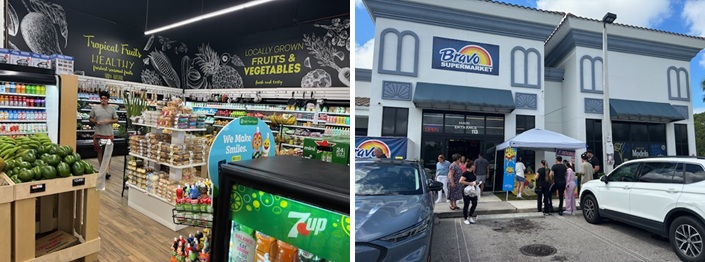
Bravo Supermarkets continues its steady expansion across Southwest Florida with the opening of a new 10,000-square-foot store at 55 Everglades Blvd. in Naples. The store marks the third Bravo location in the city — and the fourth overall under Cazola Grocers Group, which also operates a store in North Fort Myers.
“The Hispanic market in this area has grown tremendously, primarily relocating from Miami,” said Ramiro Cazola, president of Cazola Grocers Group. “While it’s strongly Cuban, we have many Argentinians, Colombians, Venezuelans and also from Central America.”
The new store features a full grocery assortment designed to appeal to a wide range of international shoppers, including a fresh produce section, meat counter, bakery, and specialty items tailored to Hispanic and Caribbean cuisines. Cazola said early traffic has been strong, reflecting growing demand for culturally focused food retailers in the region.
Each Cazola-operated Bravo location also includes a Bravo Café, where customers can order freshly prepared meals — or bring over meat they’ve just purchased from the in-store butcher shop to have it cooked and served on the spot.
“We have tables, and they can sit to eat it right there,” Cazola said. “It creates a difference from other places.”
Next up for the group is Bravo Liquors, a new concept that will open adjacent to each Bravo store, starting with the Collier Boulevard location later this year.
Responding to the region’s growing Hispanic population, Cazola Grocers Group is expanding its neighborhood-driven format, integrating grocery, foodservice, and beverage retail into a single, connected shopping experience.
Aldi Rebrands Private Labels Under One Name as U.S. Expansion Accelerates
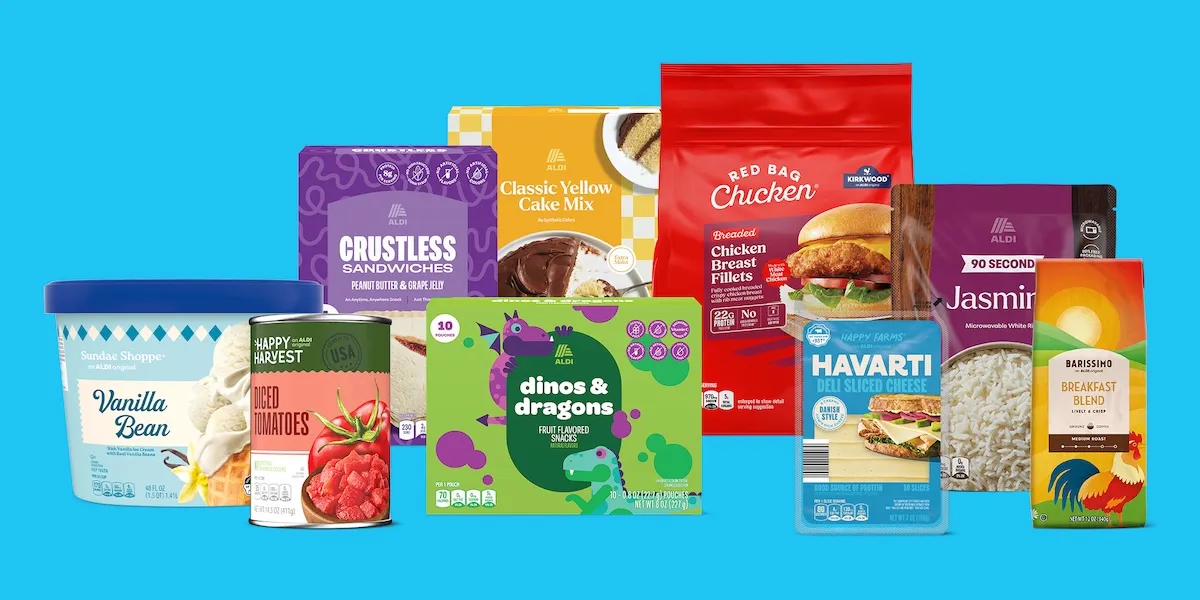
Aldi is reshaping how shoppers see its private labels — and itself. As the grocer undertakes the largest U.S. expansion in its nearly 50-year history, it’s also rolling out a sweeping packaging refresh that puts the Aldi name front and center on nearly every product it sells.
More than 90 percent of Aldi’s assortment is private label, a cornerstone of its value strategy that has long distinguished the retailer from competitors. Scott Patton, Aldi’s chief commercial officer, said the move was inspired by shoppers who already view store brands as part of the Aldi identity.
“Our customers already call our private labels ‘Aldi brands,’ and we’re excited to officially recognize them with a name they can see and trust,” he said. “Our research shows customers associate Aldi with affordability, value, quality and convenience. Now, they can feel confident knowing our trusted name is behind every exclusive product in their cart.”
Until now, most items carried independent brand names like Baker’s Corner or Dakota’s Pride, with little connection to Aldi branding. Moving forward, the company is consolidating those names from roughly 90 to just over two dozen. Many products will now appear under the Aldi name or bear the tagline “An Aldi Original,” while fan-favorite lines such as Clancy’s snacks, Simply Nature organics and Specially Selected premium products will retain their brand identities with refreshed packaging tied more visibly to the Aldi portfolio.
The rebrand is rolling out gradually and will continue over the next few years. The timing aligns with Aldi’s plan to open more than 225 new U.S. stores by the end of 2025 — reinforcing a broader strategy to elevate its brand presence while keeping its promise of affordability and simplicity.
CEO Atty McGrath, who took the helm in September, called the redesign a major step in modernizing the shopping experience. “The new look and feel make it easier than ever for shoppers to instantly spot the value and quality only Aldi can deliver,” she said.
Real American Beer Unveils Limited-Edition Hulk Brew
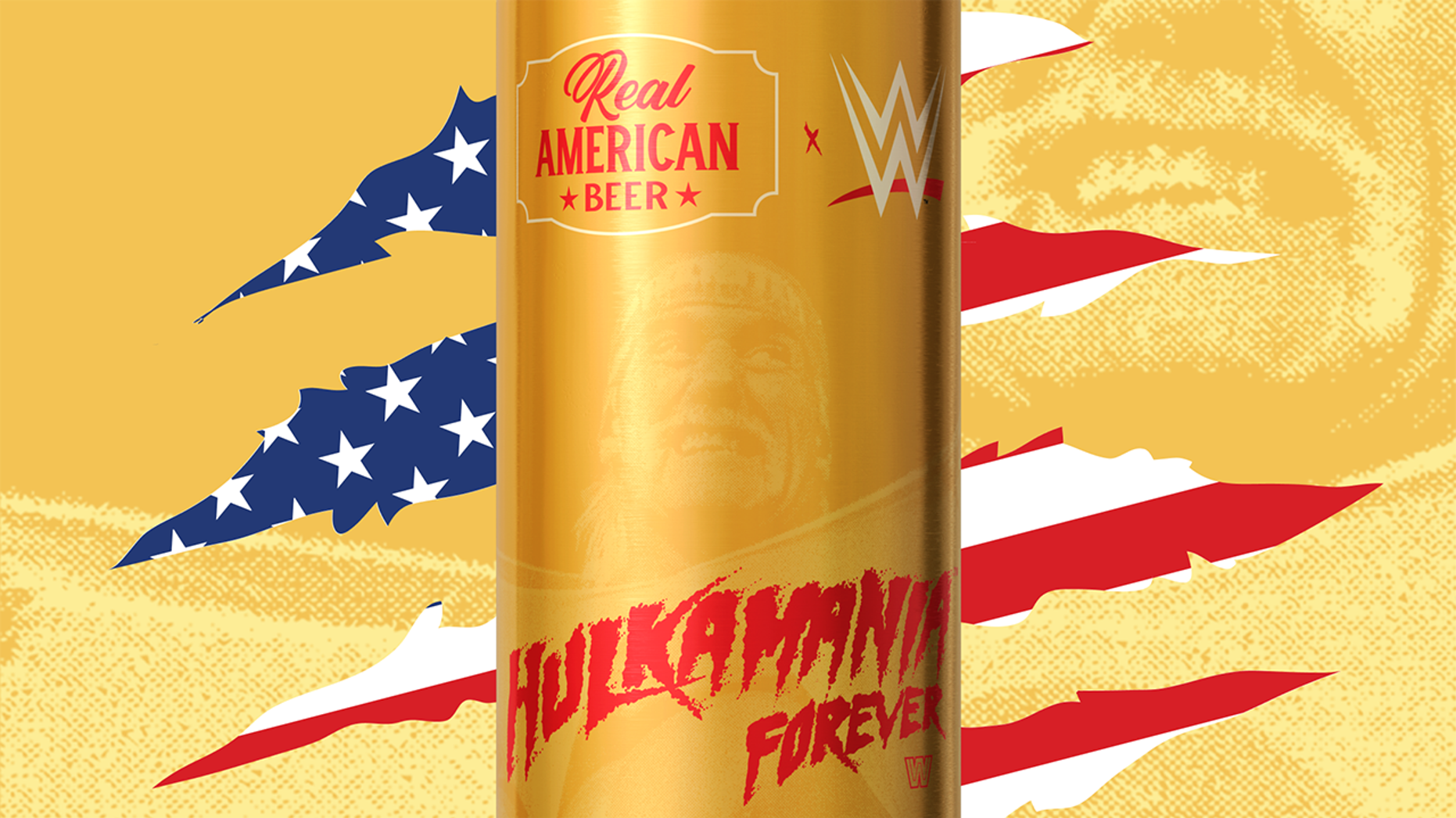
This fall, Hulkamania Forever hits store shelves — a 16-ounce light beer created by Real American Beer in collaboration with WWE to honor the legacy of Hall of Famer Hulk Hogan. The limited-edition release features cans decked out in Hogan’s iconic red and yellow design and the WWE logo, making it an instant collectible for fans.
The beer made its debut at WWE Wrestlepalooza in Indianapolis with a live toast and fan zone celebration, kicking off a nationwide campaign running through fall 2025.
“We’re proud to partner with WWE to create a true tribute to the legendary Hulk Hogan,” said Chad Bronstein, co-founder of Real American Beer. “This campaign brings together two iconic American brands, a collector-tier release and a national megaphone.”
Hulkamania Forever marks the brand’s second release, blending nostalgia, entertainment and the all-American spirit it was built on.
Since launching in June 2024, Real American Beer has grown into one of the top 10 fastest-rising beer brands in the U.S., now available in 28 states and at major retailers including Walmart.
Katie’s Pizza Lands Nationwide Distribution at Target
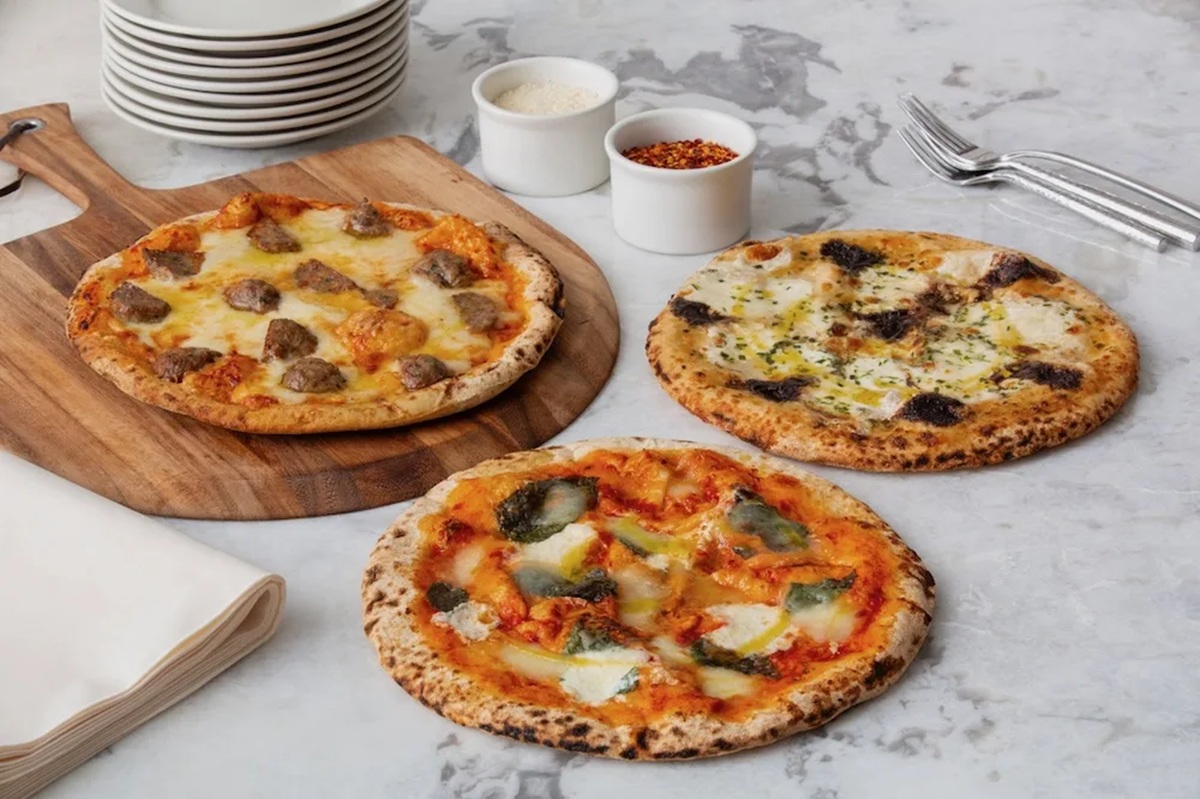
Katie’s Pizza, the chef-led artisanal frozen pizza brand, has secured a $20 million retail deal with Target, marking a major milestone for the independent, female-founded company. Four of Katie’s signature frozen pizzas are now available in all 1,800 Target stores nationwide, with additional retail expansion already planned.
The partnership includes prominent endcap placement in Target’s frozen aisle and Tier One launch status — the retailer’s highest level of marketing and merchandising support. The rollout features four varieties: Burrata Margherita, Pepperoni Stracciatella, Meatball, and Black Garlic Burrata.
“This is real food for the soul, handcrafted with the best ingredients,” said founder Katie Lee. “There’s nothing else like it, and we’re proud to stand behind that.”
Each Katie’s Pizza is handmade by chefs, not machines, beginning with 48-hour naturally leavened dough that’s hand-stretched and wood-fired at 800°F. Toppings feature house-made sauces and premium ingredients, many sourced locally or imported from Italy, resulting in a restaurant-quality pizza straight from the freezer.
Katie’s Pizza gained national attention during the pandemic, when Lee pivoted her St. Louis restaurant business to meet growing demand for high-quality at-home dining. What began as a local success story quickly evolved into regional and national distribution, leading to permanent shelf space in grocery chains — and now, a nationwide launch at Target that cements the brand’s place in the premium frozen food category.
- Katie’s Burrata Margherita Frozen Pizza - house-made sauce, Burrata, mozzarella, Parmesan, basil, extra virgin olive oil and sea salt
- Katie’s Pepperoni Stracciatella Frozen Pizza - cup-and-char pepperoni, Stracciatella and Fontina cheeses, wildflower honey and extra virgin olive oil
- Katie’s Meatball Frozen Pizza - hand-rolled meatballs made from ground beef and Italian sausage, Fontina, Parmesan and house-made sauce
- Katie’s Black Garlic Burrata Frozen Pizza - black garlic impasto, Burrata, Pecorino Romano and dried chives
Smithfield and Mike’s Hot Honey Bring the Heat to Bacon
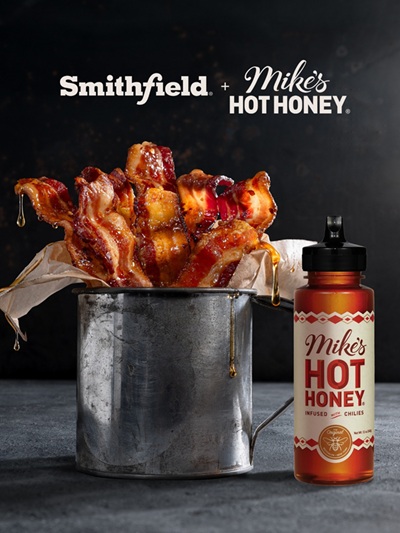
Smithfield and Mike’s Hot Honey Bring the Heat to Bacon
Two powerhouse brands are joining forces to give a breakfast staple a fiery twist. Smithfield has partnered with Mike’s Hot Honey to debut the first-ever hot honey–flavored bacon available nationwide, blending smoky hickory-cured slices with the signature sweet heat that’s made Mike’s Hot Honey a household name.
The collaboration taps into the fast-growing “swicy” (sweet and spicy) flavor trend, already showing up in sandwiches and chicken dishes across restaurant menus. When cooked, the honey caramelizes on the bacon’s surface, creating a crispy glaze that balances sweetness, salt, smoke, and spice.
“At Mike’s Hot Honey, we’re all about giving the classics a twist, and bacon is one of my personal favorites,” said Mike Kurtz, founder of Mike’s Hot Honey. “Partnering with Smithfield has been an incredible way to share that sweet heat and smoky flavor in a combination that’s simple, fun, and really tasty.”
For Smithfield, the collaboration represents a way to meet growing consumer demand for bold, flavor-forward innovations in the refrigerated aisle. “The partnership brings a flavor experience that feels both authentic and distinctive,” said Marianne Radley, managing director of marketing for Smithfield Foods. “It’s the best of tradition and trend on one plate.”
Smithfield Mike’s Hot Honey Bacon hits shelves this month at Kroger, Publix, Meijer, ShopRite, and other major retailers — bringing a breakfast favorite into the “swicy” era.
September 2025
Southeastern Grocers Rebrands as The Winn-Dixie Company, Refocusing on Florida Roots

Southeastern Grocers (SEG), parent of Winn-Dixie and Harveys Supermarket, is entering a new era — and returning to its roots. Beginning in early 2026, the Jacksonville-based grocer will rebrand as The Winn-Dixie Company, uniting its operations under one name while sharpening its focus on its home state of Florida.
The move celebrates Winn-Dixie’s century-long legacy while signaling a forward-looking strategy centered on modernization and regional strength. The transformation includes new investments in store remodels, digital capabilities, private-label innovation, and an expanded liquor store network.
“For a century, Winn-Dixie has proudly called Florida home,” Anthony Hucker, CEO of Southeastern Grocers, said in a statement. “As we enter our next century as The Winn-Dixie Company — a brand-new 100-year-old company — we’re accelerating growth where our roots run deepest while staying true to our purpose of feeding and enriching the communities, families, and neighbors who have supported us for generations.”
As part of its Florida-first strategy, the company has reached an agreement to acquire three Hitchcock’s Markets in Alachua, Keystone Heights and Williston, all slated to reopen under the Winn-Dixie name. SEG also plans dozens of remodels and new-store projects across the state, designed to create more modern, community-centered spaces with updated layouts, expanded fresh departments, and improved technology. The company will reintroduce its Lip Lickin’ Chicken product line, expand Winn-Dixie Liquor locations and test new customer conveniences such as third-party delivery and in-store return kiosks.
The rebrand comes as Florida’s grocery market grows increasingly competitive, driven by population growth, tourism, and new entrants. By concentrating on its strongest region, Winn-Dixie aims to modernize operations while reinforcing its position as Florida’s hometown grocer.
To streamline its footprint, SEG will transfer ownership of most stores outside Florida, including 32 Winn-Dixie and eight Harveys Supermarkets in Alabama, Georgia, Louisiana and Mississippi. The company will maintain a limited presence in southern Georgia, serving communities in Brunswick, Folkston, Lake Park, St. Simons Island and Valdosta.
Once those transitions are complete, The Winn-Dixie Company will operate about 130 grocery stores and 140 liquor stores across Florida and southern Georgia.
Hucker emphasized that the restructuring marks a refocus — not a retreat. “We’re profoundly thankful to our associates and customers across all our markets for their loyalty,” he said. “As we move forward as Winn-Dixie, we’ll do everything we can to ensure these transitions reflect the gratitude and respect our people deserve.”
The shift follows years of reinvention for SEG, which emerged from bankruptcy in 2018 and sold 400 stores to Aldi in 2023 before being acquired by private investors in 2025. Now, the company is leveraging that stability to double down on its Florida and revitalizing one of America’s most enduring grocery names.
Kraft Heinz to Split Into Two Companies, Unwinding 2015 Merger

Ten years after merging in one of the food industry’s biggest transactions, Kraft Heinz Co. plans to split into two standalone businesses, unwinding a $46 billion deal that created one of the world’s largest packaged-food companies.
Under the plan, one company will focus globally on sauces, spreads, and seasonings — what executives describe as “taste elevation” — anchored by powerhouse brands such as Heinz ketchup, Philadelphia cream cheese, and Kraft Mac & Cheese. The other will sell grocery staples in North America, including Oscar Mayer, Kraft Singles, Capri Sun, Cool Whip, and Lunchables.
CEO Carlos Abrams-Rivera, who will lead the $10 billion North American grocery entity, said the decision reflects the need for sharper focus. “Scale by itself is not enough,” he told analysts. “Focus and scale together create opportunities.”
The global business, which generates about $15 billion in annual sales, will be run by a separate leadership team, with a new CEO yet to be named.
Miguel Patricio, Kraft Heinz’s chairman and former CEO, said the separation is a way to reduce complexity and unlock growth. “The complexity of our current structure makes it challenging to allocate capital effectively, prioritize initiatives and drive scale in our most promising areas,” he said. “By separating into two companies, we can allocate the right level of attention and resources to unlock the potential of each brand.”
The split represents a reversal of years of dealmaking in the food sector, where scale was often seen as the ultimate advantage. Kraft Heinz was created in 2015 through a merger orchestrated by Warren Buffett’s Berkshire Hathaway and private-equity firm 3G Capital. That combination has long been criticized for underwhelming results, cost-cutting, and declining brand relevance.
Buffett, Kraft Heinz’s largest shareholder with a stake worth more than $9 billion, voiced skepticism this week. He told The Wall Street Journal the breakup would be costly and disruptive. “It doesn’t create value, and it involves lots of expenses,” Buffett said. “It does not do a thing, you know, for what the ketchup tastes like.”
Kraft Heinz has struggled in recent years as consumer tastes shift away from processed foods. Demand for pantry staples such as mayonnaise, boxed macaroni and cheese, and Capri Sun has weakened, while the company has taken impairment charges and watched its stock price fall 27% over the past year — worse than peers in packaged foods and far below the S&P 500’s 14% gain. In July, Kraft Heinz posted a $9.3 billion noncash impairment charge tied to its declining valuation.
The separation mirrors moves by other large food companies. Kellogg split in 2023 into Kellanova, focused on snacks, and WK Kellogg, a cereal company. Keurig Dr Pepper is also unwinding parts of its 2018 combination. Analysts argue that companies with narrower portfolios are better positioned to grow in today’s marketplace. “Food companies have found that their breadth of influence in the grocery store does not necessarily yield the advantages they expected,” said TD Cowen analyst Robert Moskow.
For Kraft Heinz, management says the split will free up each business to focus on its most promising categories. The grocery staples unit is expected to generate steady cash flow and pursue growth in underdeveloped channels such as convenience stores. The global “taste elevation” business will focus on international expansion and innovation in sauces and spreads. Both companies will remain headquartered in Pittsburgh and Chicago, and the split will occur through a tax-free spinoff, expected in the second half of 2026.
The move won’t be simple. Analysts note Kraft Heinz has spent years creating an integrated operating model, consolidating plants and distribution centers, and building partnerships with tech firms such as Microsoft and Google. Untangling those systems could prove costly and time-consuming.
Still, executives say the separation gives each side a clearer mandate. “We can allocate the right level of attention and resources to unlock the potential of each brand to drive better performance,” Patricio said.
Whether investors will be patient remains to be seen. As Jefferies analyst Scott Marks noted, “Questions remain around the true growth and margin potential for both new companies” given long-term softness in demand for processed food.
For retailers and suppliers, the coming changes could bring sharper category focus, but also more disruption as Kraft Heinz unwinds one of the sector’s most visible mergers.
New Poultry Brand Targets Convenience and Flavor

Easy Street, a new line of street-food inspired fresh chicken, is rolling out to grocery stores across the East Coast and Midwest. Designed for speed, flavor and value, the antibiotic-free products are ready in seven minutes or less, giving shoppers a fast, reliable meal starter.
The brand is the first consumer launch from Zach Fine, CEO of One Fine Family and Holly Poultry, one of the Mid-Atlantic’s largest poultry producers. Fine said the team spent 18 months studying the category closely with the goal of creating a product that makes dinner effortless — full of flavor, priced right, and practical.
“After decades in foodservice, I’ve seen marinated chicken brands come and go—something new every six months that doesn’t stick,” Fine told Today’s Grocer. “Instead of wet marinades loaded with 20 percent salt, we went with a dry marinade. It’s healthier, cooks faster, and lets shoppers go in all kinds of directions with it.”
Each package comes pre-trimmed, pre-diced and dry-seasoned, offering a protein that goes straight from package to pan to plate. The chicken cooks evenly for use in tacos, bowls or other quick meals, with debut flavors including Street Taco, Korean BBQ and Rotisserie. By eliminating prep time and cleanup, the brand is targeting busy families, young professionals and value-driven consumers who want fresh, versatile options in the poultry case.
Fine noted that the approach is designed to bring a foodservice sensibility into the retail poultry set, combining efficiency with evolving flavor trends to meet shopper expectations.
“The inspiration really came from street food. Easy Street was designed to be super quick, super easy — something the whole family can enjoy,” Fine added. “We even built a traveling food truck that will head to Columbus, Philadelphia, Washington, D.C. and New York activating at concerts, sporting events and Oktoberfest between September 8 and November 1.”
Easy Street is already on shelves at Aldi, Giant Eagle, Giant Food, Harris Teeter, Market Basket, Weis and ShopRite, with distribution across 10 states and Washington, D.C. Conversations are underway with Publix, which Fine said may launch later this year or in early 2026.
Looking ahead, the company plans to rotate in seasonal flavors such as French Onion, Spicy Garlic and Chicken Parmesan, along with six limited-time offers tied to trending profiles. “The idea is to drive consumers back into the grocery store to try what’s new,” Fine said.
Beyond retail, One Fine Family and its brands donate more than 350,000 pounds of chicken annually to local organizations and disaster relief programs, underscoring a broader commitment to community support.
Beef Prices Hit Records Amid Tight Supply and Global Pressures
Beef prices continued their climb in July, showing the most significant increase among all food categories. According to the Consumer Price Index (CPI), beef and veal prices rose 2.5 percent from June to July — the seventh consecutive monthly gain — and are now 11.3 percent higher than a year ago.
The average price of ground beef hit a record $6.32 per pound last month, up more than 13 percent from a year earlier and nearly 60 percent higher than at the start of 2021, according to the CPI’s average price data.
Years of drought have damaged grazing lands, forcing ranchers to send cattle to slaughter earlier to avoid costly feed, reducing the size of U.S. herds faster than they can be rebuilt.
The USDA reported 94.2 million head of cattle and calves as of July 1, the lowest inventory since 1951 and down nearly 3 million head from 2020. Experts describe the situation as “a perfect storm of a bunch of different things coming together at the exact same time,” with supply unlikely to stabilize quickly. Analysts estimate it could take at least two to three years before inventories recover enough to moderate prices.
Imports, which typically help fill supply gaps, are also tightening. The USDA expects beef imports to fall 6.1 percent to 4.95 billion pounds over the next year, pressured by tariffs — including a 50 percent duty on Brazilian beef — and halted live cattle shipments from Mexico.
Despite sticker shock at the checkout line, consumer demand remains resilient. The National Cattlemen’s Beef Association reported fresh beef sales at retail rose 9.7 percent in 2024, with pounds sold up 4.5 percent, underscoring beef’s enduring role in U.S. diets even amid record costs. To meet that demand, the U.S. imported a record 4.6 billion pounds of beef in 2024.
Vendors Spotlight Innovation, Community at NSA Florida Show

Hundreds of exhibitors and buyers converged in South Florida this year, turning the Taste of the Americas Buying Show into a marketplace under one roof for the food and beverage industry. The floor featured categories spanning meat and seafood, produce, grocery, beverages and floral, underscoring the show’s growing role as a hub for suppliers and retailers across the hemisphere.
Francis Rodriguez, president of the National Supermarket Association’s Florida Chapter, described the event as “building a supermarket inside a trade show,” noting its expansion from 60 vendors at its debut to 300 this year. He emphasized the importance of bringing customers, markets and vendors together, particularly as inflation, shifting demographics and economic pressures challenge communities.
“It’s very exciting to see the growth and success over the years,” he said, stressing the need to deliver the right selection at the right price.
Exhibitors used the platform to spotlight both established and emerging brands. Guillermo Quirch IV, manager at Quirch Foods, praised NSA as “fantastic partners,” citing the show’s role in connecting vendors and key customers. Quirch highlighted two private labels—High River Angus and Panamei Seafood—alongside Kikiriquirch poultry, Mambo Foods, Certified Angus Beef and exclusive distribution of Chiquita frozen tropical fruits. “We’re seeing double-digit growth monthly,” he added.
In the floral space, Ecuagarden sales manager Paola Vanegas showcased roses from the company’s 30-hectare plantation in Tabacundo, Ecuador. With four decades of production and 15 years of U.S. distribution, the brand supplies retailers such as Key Food, Presidente Supermarkets and El Bodegon. Ecuagarden also provides in-store services, from refreshing displays to holiday decorations.
“We become the garden for the supermarket,” Vanegas said, noting that shows like NSA are essential for aligning with buyer needs.
JMA Import & Export featured Malta Bucanero and its Guamá brand, launched in 2022, alongside evaporated and condensed milk, oils and seasonings. Founded by Marta Santana and Juan Ramos, the South Florida–based company distributes through Walmart, Fresco y Mas, Sedano’s, Navarro and Key Food. “We started with one van and a 1,000-square-foot warehouse—today we operate 10 vans,” Ramos said, crediting the show with helping expand visibility.
Morales Beverage Group, part of Mexcor International, highlighted liquor, wine and CBD-infused beverages. “At NSA, the impact doubles—you don’t see five clients in a day, you see 2,500,” said Pablo Perez, vice president of sales, adding that the show enables exclusive one-day specials.
The program closed with Badia Spices being named Company of the Year. “Because of the independent supermarkets we’re nationwide—Publix and Winn-Dixie brought us on board. It all began with the heart and soul of that show,” said Scott DeNight, national sales director.
Founded in 1967 by Joseph “Pepe” Badia, the family-owned company has grown into a leading name in the spice and seasoning category, distributed across chains and independents nationwide. As DeNight summed up, “We grew organically, one bottle at a time.”
Emma Navarro Serves Up Cool with Talenti Partnership

Talenti has partnered with rising tennis star Emma Navarro in a new campaign showing what it means to stay cool under pressure, both on and off the court.
The collaboration debuts with a 30-second digital spot, “High Pressure Presser,” following Navarro from match point to a post-match press conference. When asked how she keeps her composure, she reveals her indulgence of choice: Talenti gelato and sorbetto, crafted with simple, real ingredients and a slow batch-cooking process for maximum flavor.
“Tennis has taught me the importance of composure, resilience and finding moments of joy even in the toughest matches,” Navarro said. “You can taste that same passion and dedication in a spoonful of Talenti.”
Currently ranked No. 11 in the world, Navarro is known for her precision and drive on the court, while off it she brings a lighter, more humorous side to fans.
“Emma Navarro is one of the most exciting rising stars in tennis,” said Nicole Towner, associate director at Talenti. “Her cool confidence mirrors the elevated indulgence that Talenti brings to the ice cream aisle.”
Following a breakout 2024 season that included a US Open semifinal run and two WTA titles, Navarro now joins Talenti as a Talenti Tastemaker, a group of individuals recognized for mastery in their craft.
To celebrate, Navarro is sharing her go-to summer refreshment: the Talenti Raspberry Smash, made with club soda, mint, lemon, fresh raspberries and her favorite flavor, Talenti Roman Raspberry Sorbetto.
August 2025
Better-For-You Snacks Win Shelf Space at ShopRite

Becky Dheri and Sarah Hartmann are bringing fresh energy and innovation to the better-for-you category across both snack and frozen aisles. Their brands— Vêsucré and Day Out—are now hitting shelves at ShopRite.
As a busy mom and pharmacist, Dheri struggled to find nutritious, convenient snacks that fit her on-the-go lifestyle. Frustrated by the ultra-processed options packed with gums, preservatives, and artificial ingredients, she began experimenting in her kitchen before coming up with bite-size protein balls that led to the launch of Day Out in 2019.
“Over time, I became frustrated by the lack of options that were convenient, nutritious and made with clean ingredients,” she said. “I could feel the physical toll these choices were taking on my body: low energy, difficulty concentrating and lack of motivation.”
Meanwhile, a fellow entrepreneur was following her own path to better-for-you innovation.
After switching to a vegan diet several years ago, Hartmann found herself missing the creamy indulgence of frozen dairy desserts. Today, her company, Vêsucré, offers plant-based treats free from dairy, soy, gluten and refined sugar.
“What began as a creative outlet quickly turned into a calling,” Hartmann said. “I realized there was a huge gap in the market for indulgent desserts that were both clean-label and mission-driven. That discovery pushed me to learn the industry from the ground up—ingredient sourcing, food safety, manufacturing, distribution, and everything in between.”
Dheri and Hartmann’s success reflects a larger shift in consumer behavior—one that’s fueling growth in the better-for-you food segment.
“Consumers, me included, are shifting toward functional eating,” said Dheri. “We don’t just want to feel full; we want to feel good.”
From plant-based indulgence to high-protein, additive-free snacks, today’s better-for-you category is driven by quality, transparency, and purpose—traits that resonate with a new generation of wellness-minded consumers and are helping brands like Day Out and Vêsucré gain traction in retail.
“Consumers today are more label-conscious than ever,” said Hartmann. “They’re not just looking for foods that are better for their bodies—they’re seeking out products that align with their values.”
As winners Wakefern’s Total Store Local Supplier Summit, Dheri and Hartmann represent the next generation of food leadership—women-led, mission-driven and tuned into what today’s consumers are hungry for.
“At Wakefern, we’re passionate about championing local businesses and supporting entrepreneurs who inspire others with their stories,” said Darren Caudill, chief sales officer of Wakefern, the largest retailer-owned supermarket cooperative in the U.S. “Both Becky and Sarah are creating more than just great products—they are also making a positive impact in their communities.”
Vêsucré and Day Out will potentially be available soon at other Wakefern supermarket banners, which include Price Rite Marketplace, The Fresh Grocer, Dearborn Market, Di Bruno Bros., Gourmet Garage and Fairway Market.
Vilore Acquires Tia Lupita Foods, Entering Natural Foods Space

Vilore Foods, a San Antonio-based distributor of culturally connected and emerging brands, has purchased Tia Lupita Foods, a fast-growing startup known for its hot sauces, grain-free cactus tortilla chips, and Mexican Chili Crunch.
The acquisition expands Vilore’s portfolio of authentic, heritage-driven products while marking the company’s first entry into the natural foods category. Tia Lupita products are free from artificial preservatives, aligning with consumer demand for “better-for-you” and sustainable offerings.
“Tia Lupita’s growth and potential caught our eye as more U.S. households seek trusted, authentic, culturally connected products,” Edgar R. Vargas, director of growth and brand development for Vilore Foods, said in a statement. “This acquisition positions Vilore to expand further into natural, specialty, and mainstream retail channels.”
As part of the acquisition, Tia Lupita will operate as an independent business unit within the Vilore Foods family. This structure allows the brand to preserve its entrepreneurial spirit, identity, and innovation while tapping into Vilore’s resources and expansive distribution network to accelerate growth. Financial terms of the deal were not disclosed.
The move expands Vilore’s portfolio, which includes leading Hispanic brands such as La Costeña, Jumex, Totis, and Kern’s, and marks the company’s entry into the natural foods category.
Founded in 2018 by Hector Saldivar, Tia Lupita Foods was inspired by a family hot sauce recipe handed down from Saldivar’s mother, nicknamed “Tia Lupita.” In August 2019, the brand launched tortilla chips formulated with a blend of cassava flour and nopales cactus, offering a lower-calorie, lower-carb alternative to traditional tortillas.
“Vilore Foods understands the cultural roots that drive our brand and has the experience to bring our products to more shelves and kitchens across the country,” said Saldivar.
The startup gained national attention after appearing on Shark Tank in 2023 and securing an investment from Kevin O’Leary, which helped fuel product and distribution growth.
Dole Sells Fresh Vegetables Division in $140M Deal

Dole has finalized the sale of its Fresh Vegetables Division to og Holdco, the parent company of organicgirl and a portfolio company of Arable Capital Partners, for a total of $140 million. The transaction includes $90 million in cash, a $50 million seller note and a $10 million potential earn-out.
“This sale represents an important strategic milestone for the Group,” Carl McCann, executive chairman of Dole, said in a statement. “It enables us to sharpen our focus and investment on core business activities. The combination with organicgirl will also create operational synergies and enhance the value proposition for both customers and consumers.”
The Fresh Vegetables Division comprises operations related to the processing and sale of whole produce such as iceberg, romaine, leaf lettuce, cauliflower, broccoli, celery, asparagus, artichokes, green onions, sprouts, radishes, and cabbage, as well as salads and salad kits.
The division also operates three processing plants across the U.S. and employs more than 3,000 people. Dole is retaining its facilities in Huron, CA and Yuma, AZ, marking a strategic shift as it sharpens its focus on core business areas.
Derek Yurosek, managing director at Arable Capital Partners, called the acquisition “an outstanding addition” to the firm’s portfolio. “With strong brands, multi-channel reach, and seasoned leadership, Dole Fresh Vegetables is well positioned for continued growth,” he said.
This transaction follows a previously announced deal between Dole and Fresh Express, a Chiquita Brands subsidiary, for $293 million in February 2023. That deal was called off in March 2024 after the U.S. Department of Justice raised antitrust concerns, stating the merger would reduce competition and potentially lead to higher prices in the fresh-cut salad market.
For grocery retailers, wholesalers, and category managers, the acquisition signals a potential shift in the fresh vegetable supply chain. With Arable’s investment and organicgirl’s brand strength, the newly combined entity is expected to explore portfolio expansion, operational efficiencies, and adjustments to pricing, assortment, and service models.
Tim Stejskal has been named CEO of the new platform. He joined Arable in 2023 as an operating partner and brings deep experience from his prior roles as CEO of Fresh Innovations and senior executive at Dole Fresh Vegetables/Bud Antle.
“This new platform creates a diversified produce portfolio that strengthens each brand’s legacy of innovation and commitment to exceptional customer service,” he said.
Truly Grass Fed Expands at Publix, Natural Grocers and H-E-B

Sustainably produced dairy products Truly Grass Fed has expanded its distribution agreements with Publix, Natural Grocers and H-E-B, bringing its products to 3,200 new points of distribution.
Truly Family Farms, a farmer-owned co-operative, produces grass-fed butter and cheese as well as oats milk which are imported from Ireland.
“Today’s consumers are looking for nutritious, responsibly produced food and we’re thrilled to see our partners responding to this demand to make it easier than ever for families to have offerings that align with their values,” said Jaclyn Crabbe, marketing director for Truly Family Farms.
The expanded distribution will place different Truly Grass Fed products at each grocery chain. Publix and Natural Grocers will feature an almost complete selection of the brand’s items.
Publix: 1,300 Publix locations in the U.S. will begin carrying Truly Grass Fed’s Natural Creamy Salted and Unsalted Butter 16oz Sticks. Publix already stocks Truly Grass Fed butter blocks 8oz, spreadable butter 8oz and two cheddar cheese selections.
Natural Grocers: 163 Natural Grocers locations expanded their Truly Grass Fed assortment to include a broader range of cheddar cheese products - Natural Sharp Cheddar Cheese Wedge, Natural Aged Cheddar Cheese Wedge and Maker’s Blend Aged Cheese Wedge alongside existing offerings such as Natural Creamy Salted and Unsalted Butter Blocks 8oz, Butter 16oz sticks, as well as the brand’s Truly Gluten Free Original and Extra Creamy Oat Milks.
H-E-B: Truly Grass Fed’s butter 8oz blocks will now be available in a majority of H-E-B locations—marking a significant expansion from previous availability in just 50 percent of stores. The full line of Butter 8oz Blocks, including Natural Creamy Salted and Unsalted, will now be accessible to more consumers.
According to the company, all its products come from cows that are 95 percent grass-fed on farms with an average of one cow for every two acres of land, non-GMO project verified, animal welfare approved by A Greener World, and free from growth hormones and antibiotics.
Foot Traffic Puts Trader Joe’s, Aldi and Lidl in the Lead

The grocery segment overall has posted slow growth in store visits during the first half of 2025, but foot traffic over the same period has put Trader Joe’s, Aldi and Lidl ahead of many supermarket chains, according to the latest data from data analytics firm Placer.ai.
The discount and specialty grocers posted strong gains: 11.9 percent at Trader Joe’s, 7.1 percent at Aldi and 4.9 percent at Lidl. By contrast, overall grocery market’s year-over-year increase during the same period was 1.5 percent.
“The grocery segment has never been more competitive, and Aldi, Trader Joe’s and Lidl have consistently emerged as top players,” the report found. “The three chains share similarities: all offer a limited assortment of groceries and tend to operate at lower price points.”
The results mirror those published in a March report from Placer.ai that tracked how Aldi and Trader Joe’s made dramatic foot-traffic gains for the full year of 2024, with Aldi up 18.2 percent year-over-year and Trader Joe’s up 6.2 percent.
The three retailers are leading the charge via lower prices, simplified product lines and strategic expansion.
Trader Joe’s—with 608 stores across the U.S.—continues to see some of its strongest gains in its home state of California, where it launched in 1967. Known for its private-label products, the retailer increased its share of grocery visits in the state to 15.7 percent in the first half of 2025, up from 13.2 percent in 2019.
“This success underscores the value of investing in product and community—two areas where Trader Joe’s excels,” the report said.
Aldi, the German discount grocery store chain, opened its first U.S. store in Iowa in 1976 and now operates over 2,508 stores. Placer.ai reports that average visits per Aldi location are up 1.6 percent from 2024 and an impressive 26.7 percent higher than in 2022.
Lidl, another German-based grocer, has 187 locations in the U.S. and is steadily expanding its presence along the East Coast. It has made gains with suburban shoppers, increasing its share from 11.8 percent to 14.5 percent and with wealthy segments, which rose to 11.2 percent from 8.4 percent.
“Lidl has been adding new stores in recent months, leaning into its thriving suburban segment, while also expanding into major cities,” Placer.ai noted.
July 2025
Del Monte Foods Files for Bankruptcy and Seeks a Buyer
Canned fruit company Del Monte Foods filed for Chapter 11 bankruptcy less than a year after executing a controversial debt restructuring. The company sought court protection in New Jersey, saying it is carrying roughly $1.245 billion in secured debt.
Founded in 1886, the company built its reputation on canned fruits and vegetables, becoming one of the most recognizable food brands in the country.
Describing it as a strategic step forward, executives indicated they plan to sell all assets including staples like College Inn broths, Contadina tomatoes and its signature Del Monte canned foods brand, which includes canned fruits, vegetables, fruit cups, juices, and more.
“After a thorough evaluation of all available options, we determined a court-supervised sale process is the most effective way to accelerate our turnaround and create a stronger and enduring Del Monte Foods,” said President and CEO Greg Longstreet in a statement. “With an improved capital structure, enhanced financial position and new ownership, we will be better positioned for long-term success.”
Del Monte attributed the bankruptcy filing to factors including a decline in customer demand and spending shifts, a costly buildup of excess inventory resulting from elevated demand during the Covid-19 pandemic and interest expenses that nearly doubled over the last five years to $125 million.
Court filings show the company listed estimated liabilities between $1 billion and $10 billion. Del Monte said it has secured $912.5 million in financing, including $165 million from some of its existing lenders, to maintain its operations during the sale process.
“While we have faced challenges intensified by a dynamic macroeconomic environment, Del Monte Foods has nourished families for nearly 140 years, and we remain committed to our mission of expanding access to nutritious, great-tasting food for all,” Longstreet said.
Del Monte is the fourth company in the food and beverage sector to file for Chapter 11 this year and No. 15 since the beginning of 2024, according to data analytics firm Debtwire.
Headquartered in Walnut Creek, California, Del Monte operates six production facilities across the U.S., and two in Mexico. In 2014 the company was acquired by Del Monte Pacific, based in the Philippines.
Del Monte also operates outside of the U.S. and Mexico, with other main locations in the Philippines, Singapore and India. The company says it doesn’t expect interruptions to non-U.S. units.
Defying the Odds and Overcoming Challenges

Four years in the making, brothers Albert Gonzalez and Nick Gonzalez turned their dream into reality with the opening of Flamingo Supermarket
At Flamingo, a member of Bravo stores, grocery aisles display a broad lineup of food appealing to an array of international consumers including from Caribbean, Central American, Haitian, South American and West Indian countries.
“Every nationality has a place here,” said Albert.
The Gonzalez brothers held a ribbon-cutting ceremony, accompanied by Cooper City Mayor James Curran and special guests, to officially commemorate the debut of Flamingo in Cooper City’s Embassy Lakes Shopping Center.
Flamingo features the popular format of including various eateries within the location. On one side Giuseppe’s Bakery shares space with the prepared food section. Just inside the door employees at Cane Cartel prepare juice orders. Custom tacos are made-to-order at Taco Way. There’s also a jewelry store inside the supermarket.
“My brother and I are big foodies,” said Albert Gonzalez, “We want to make Flamingo a destination where people come to get something, enjoy and stay.”
Already in development are two sit-down restaurants where shoppers will be able to order American and Mediterranean and food, accompany them with draft beer and take in a sports event.
The Gonzalez family has a long history in the grocery industry. Krasdale Foods helped their father open his first grocery store in 1977. Continuing to work with Krasdale after moving to Florida 25 years ago, he opened Bravo Supermarkets in Hollywood and Pembroke Pines.
Wegmans Begins Testing Instagram’s Caper Carts

Wegman’s introduced Instacart’s AI-powered smart carts Caper Carts at Wegmans Dewitt in Syracuse, NY as part of a pilot program. The grocer will be testing smart carts from two different technology providers.
Executives said their goal is to determine if Smart Cart Technology is a fit for the unique shopping assortment offered in Wegmans stores and if it meets the shopping needs of their customers. Family-owned Wegmans operates 112 stores along the East Coast.
Caper Carts automatically recognize items as they are dropped into the cart and customers can bag as they shop, tapping signals from an array of Caper Cart cameras, digital scale and location sensors. They can also pay directly from the cart. Shoppers can log in to their Wegmans Shoppers Club account on the cart’s touchscreen to access personalized offers and savings.
The rollout of Caper Carts marks the latest evolution in a partnership between Instacart and Wegmans, which began in 2017 with same-day delivery and has since expanded to include pickup, EBT SNAP acceptance, and loyalty program integration.
Caper Carts are part of Instacart Connected Stores, their suite of technologies, bridging online and in-store experience. Instacart recently launched shoppable displays and began testing online delivery offers for customers checking out on the smart carts.
Caper Carts are in use at grocery stores in more than 60 U.S. cities, including ALDI, Geisslers, Heritage Grocers Group, Kroger, Schnucks, Wakefern Food Corp. (ShopRite) and Weis Markets, along with many regional and local independent grocers.
MIDA Conference & Food Show

Leading the food industry in the Caribbean, the annual Marketing, Industry and Food Distribution Chamber Convention & Food Show (MIDA) delivered a vibrant forum for business exchange and networking among suppliers, sellers, buyers, wholesalers and retailers.
Celebrating its 45th anniversary, MIDA has become a key showcase for market trends, cutting-edge ideas and product launches. More than 2,000 executives and entrepreneurs from the food industry gathered at the Puerto Rico Convention Center for a series of conferences, an event to match suppliers with buyers and an awards ceremony recognizing companies and employees.
Over 500 exhibitors showcasing food products and related services from local companies and international pavilions representing the U.S., Costa Rica, Brazil, Panama, Colombia, the Dominican Republic, and Trinidad and Tobago participated in the conference.
“This is event helps place new products on supermarket shelves across the island and introduces local products to other markets and countries,” said Manuel Reyes Alfonso, MIDA’s executive vice president.
Pedro Penton, CEO of Tecnica, described MIDA as “fun, exciting, resourceful, educational and informative” offering valuable lessons and market contacts.
“While the products impressed, it was the attendants who truly stood out,” he added. “They played a key role in the event’s success.”
MIDA has evolved into an international event that draws companies from various countries seeking to build business relationships with Puerto Rican entrepreneurs.
“Over the years, this convention has led to agreements that resulted in the export of Puerto Rican products to different parts of the world,” said MIDA President Felix Aponte. “It also fosters relationships that help grow and strengthen the industry responsible for the island’s food security.”
During the event, MIDA presented the results of Radiografía del Consumidor 2025, the annual study on consumer purchasing habits and economic realities on the Island.
Dunkin’ and Sabrina Carpenter Teamed Up Once Again

Pop star Sabrina Carpenter launched another drink with Dunkin’ - Sabrina’s Strawberry Daydream Refresher is highlighted in the breakfast chain’s new summer lineup. Mixed with oat milk and topped with cold foam, it’s crafted to create the flavor profile of strawberries and cream.
The limited-time beverage marks Carpenter’s second signature drink with the Dunkin,’ following Sabrina’s Brown Sugar Shakin’ Espresso released in late 2024. In a press release, Dunkin’ described the drink as “strawberries and cream in a sip,” emphasizing the dreamy aesthetic that anchors the campaign.
As part of its new summer menu Dunkin’ also unveiled a trio of ice cream-inspired frozen coffees. The drinks are available in three flavors – cookie dough, mint chocolate chip and butter pecan – all topped with whipped cream, drizzle and crunchy waffle cone pieces. Also in the lineup, a new Chipotle Hash Brown Wake-Up Wrap which features hash browns, egg, melted American cheese, all-new chipotle aioli and a choice of bacon or sausage, all wrapped in a tortilla.